
The most important decision you’ll make when buying a golf simulator has nothing to do with screens, projectors, or software. It’s about how your system tracks ball flight—using cameras or radar. Getting your head around how these different technologies work might be the biggest factor in picking the right one for your game, and this stuff matters way more than you’d think.
I’ve tested dozens of launch monitors in both categories, hit thousands of shots across radar and camera systems, and watched golfers make expensive mistakes by choosing the wrong technology for their situation. The differences aren’t subtle. They affect accuracy, space requirements, setup complexity, and whether your system excels at full swings, short game, or both.
This guide breaks down exactly how each technology works, where each one dominates, and which fits your specific practice environment and goals.
Key Takeaways
- Camera-based systems use high-speed cameras to photograph the hitting area and record what the golf ball and club are doing when the club strikes the ball, while radar systems emit thousands of invisible radio waves that bounce off the golf ball and clubhead
- Radar systems typically have higher sampling rates providing more data points during ball flight, leading to greater accuracy in calculating launch angle and spin rate
- Camera-based systems excel in measuring club data and impact dynamics, requiring significantly less space than radar counterparts by mounting adjacent to or above the hitting area
- Camera systems handle sidespin, short chips, and putting in ways radar simply can’t, with photometric units capturing short game shots more reliably
- Radar systems are less sensitive to environmental factors such as lighting and shadows, often doing better in outdoor scenarios
- Photometric tracking reads launch, spin, and shot shape far more consistently than radar units under $1,000, with camera-based accuracy usually reserved for premium models
- Radar launch monitors require larger spaces generally needing 16-20 feet depth, while camera-based systems work in spaces as small as 10-12 feet
- The Rapsodo MLM2PRO combines Doppler radar and two cameras making it the most accurate launch monitor under $1,000 by leveraging both technologies
How Camera (Photometric) Technology Works
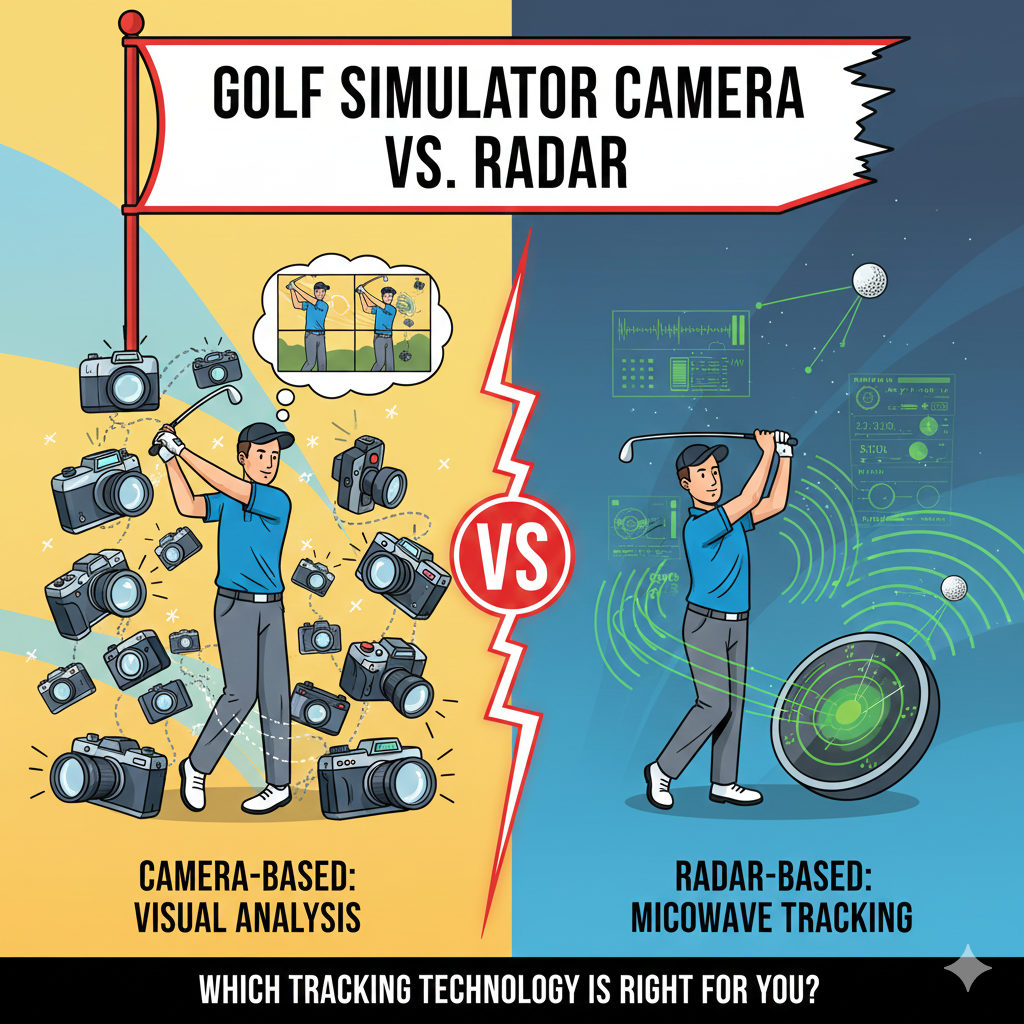
Camera-based systems use high-speed cameras to read golf shots, with each photometric golf launch monitor having one or more cameras that take pictures of the hitting area recording what the golf ball is doing and what the golf club is doing when the club strikes the ball.
Photo systems, more formally called “photometric” systems, work by taking hundreds of photos per second using high-speed cameras, with these photos fed as inputs through various computer vision algorithms to calculate data points.
Think of it like filming your swing with the world’s fastest camera. They use very high speed cameras to take numerous images or video footage of the ball as it is impacted by the club and makes its initial flight. The system captures the moment of impact and the first few inches of ball flight, then uses complex mathematics to calculate the complete trajectory.
What Camera Systems Measure Best
Camera-based systems including those from Foresight and Uneekor use high-speed photometric technology to capture thousands of images per second at the moment of impact. This allows them to see details radar systems miss.
Camera-based systems excel in measuring club data and impact dynamics, being particularly adept at providing real-time information about what happens at the moment of impact, making them invaluable for swing analysis.
Club face angle at impact: Cameras see exactly where your clubface points when it strikes the ball—information crucial for diagnosing slices and hooks.
Impact location: Premium camera systems show precisely where on the clubface you made contact. Toe strikes, heel strikes, high on the face, low on the face—this data transforms equipment fitting and swing diagnosis.
Attack angle: The vertical angle your club approaches the ball matters enormously for optimization. Camera systems measure this directly by photographing the clubhead path.
Dynamic loft: What the loft actually is at impact differs from the static loft stamped on your club. Cameras capture this real-time measurement.
Short Game Excellence
Camera systems handle sidespin, short chips, and putting in ways radar simply can’t, with Square Golf’s indoor setup excelling where budget radar units struggle.
Photometric monitors are exceptionally precise in providing information related to the club head and ball contact but cannot provide feedback on the actual ball flight—they calculate it instead. However, for short shots where you’re only hitting the ball a few yards, cameras shine.
Exceptional short game capabilities make camera devices a standout, with putting and chipping numbers that radar systems struggle to match.
Popular Camera-Based Systems
Foresight GCQuad ($16,000-$18,000): Uses advanced quadrascopic imaging with four cameras capturing 17 data points, surpassing previous models in both quantity and precision. The gold standard for professionals.
Bushnell Launch Pro / Foresight GC3 ($2,000-$7,500): Same photometric technology as premium Foresight systems at dramatically lower cost. Professional-grade accuracy for serious practice.
SkyTrak+ ($2,995): The SkyTrak+ adds a new dual Doppler radar system that works alongside a photometric system, measuring club data the original SkyTrak could not including clubhead speed, club path, face to path, and face to target.
Square Golf ($699): The first photometric golf launch monitor for under $1,000, offering accuracy typically reserved for premium models with exceptional putting and chipping capabilities.
Uneekor EYE Series ($3,000-$8,000): Uses advanced photometric technology and three high-speed infrared cameras to monitor both ball and club data with Face Impact video capabilities among the best in golf.
How Radar (Doppler) Technology Works
Radar-based systems use Doppler radar technology which emits thousands of invisible radio waves from the device that then hit the golf ball and/or clubhead and ping that reflective information back to the launch monitor.
This technology works by emitting radio/radar signals through the air which bounce off a flying golf ball, with the system measuring the change in wave frequencies bouncing off the golf ball to calculate the ball’s speed, launch angle, direction, spin, and more.
It’s the same technology weather forecasters use to track storms, police use to measure vehicle speed, and the military uses to detect incoming missiles. In each case, a radar device is emitting those radio waves and receiving the information that’s “bounced” back to them to make their determinations.
What Radar Systems Measure Best
Radar systems directly measure the velocity of the golf ball using the Doppler effect—when radar waves bounce off the moving ball, the frequency of returned waves changes based on ball speed, providing precise real-time data.
Radar systems typically have higher sampling rates compared to camera-based systems, with higher rates providing more data points during the ball’s flight leading to greater accuracy in calculating launch angle, spin rate, and other parameters.
Complete ball flight tracking: Radar follows the ball from impact to landing, measuring what actually happens rather than calculating what should happen. This provides advantages for outdoor use and analyzing shot shape.
Carry and total distance: Because radar tracks the entire flight, distance measurements reflect actual performance rather than mathematical projections.
Apex height: The maximum height your ball reaches during flight—valuable data for understanding trajectory and club selection.
Descent angle: How steeply the ball comes down affects stopping power on greens. Radar measures this directly.
Also Read: Golf Simulator Basics & Comparisons
Environmental Versatility
Radar systems are less sensitive to environmental factors such as lighting, shadows, and ball visibility, with photometric systems encountering challenges when lighting conditions change.
If you’re outdoors and want to see ball data with true shot shapes, apex heights, and total distances, radar is tough to beat, while cameras work best inside or when you need to measure club data consistently without weather-related effects.
Popular Radar-Based Systems
TrackMan 4 ($22,495): TrackMan delivers a complete picture of every shot from impact to landing, tracking metrics like spin rate, launch angle, height, and carry distance with pinpoint accuracy using dual radar technology.
FlightScope Mevo+ ($2,200-$3,200): Combines radar with image processing for enhanced accuracy. Portable, versatile, and significantly less expensive than TrackMan while delivering comparable performance.
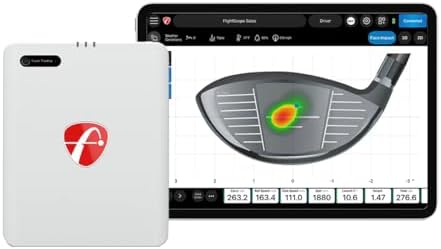
- PORTABLE LAUNCH MONITOR AND SIMULATOR: The FlightScope Mevo Gen2 uses patented FlightScope Fusion Tracking technology to…
- PRACTICE WITH PURPOSE: Dial In Your Distance with 18 Full Swing, Chipping and Putting Data Parameters. Bring to the rang…
- AS SEEN ON TV FLIGHTSCOPE TRACER: Witness the full flight path of your ball, from launch to landing, rendered in stunnin…
Garmin Approach R10: Budget-friendly radar unit that works indoors and outdoors. Limited data compared to premium options but exceptional value for recreational golfers.
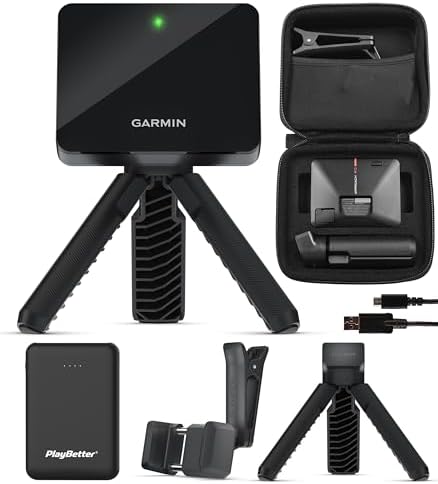
- Get More from Your Game: Train anywhere with the Approach R10 launch monitor and golf simulator featuring shot metrics, …
- Portable Launch Monitor That Brings the Course to You: This golf launch monitor portable device is lightweight enough to…
- Measures Key Metrics and Preloaded Courses: Improve your game with this Garmin launch monitor that provides key metrics …
Rapsodo MLM2PRO ($700): Combines Doppler radar and two cameras making it the most accurate launch monitor under $1,000, with a built-in camera helping track the ball for accuracy while a second camera records impact at 240fps.

- Advanced Golf Launch Monitor – The Rapsodo MLM2PRO golf launch monitor delivers pro-level accuracy, measuring 13 core go…
- Golf Simulators for Home & Practice – Pair this mobile launch monitor with your smartphone or tablet to transform any sp…
- Ultimate Golf Tracker & Swing Analyzer – Get real-time data on ball speed, club speed, and launch angle with this cuttin…
Voice Caddie SC4 Pro ($600-$700): Doppler radar with built-in display. No subscriptions required, making long-term ownership costs lower than competing systems.
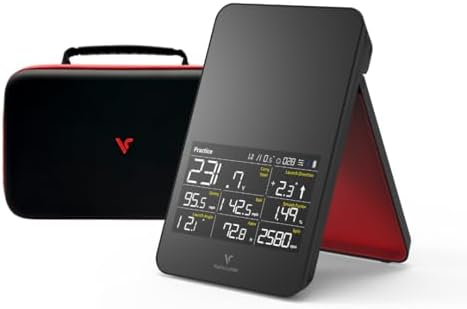
- PRO-GRADE ACCURACY ANYWHERE: The SC4 PRO Launch Monitor delivers precise ball and clubhead tracking with ProMetrics Engi…
- IMMERSIVE VIRTUAL TRAINING: Access the 3D Driving Range and E6 Connect simulator for free, enabling lifelike, high-quali…
- ADVANCED METRICS VIA VOICECADDIE S APP: Unlock detailed statistical analysis with new swing metrics, including spin axis…
Space Requirements: The Critical Difference
Radar units track the golf ball using Doppler radar measuring the ball’s flight as it travels downrange, typically requiring 16-20 feet of depth (8 feet behind the ball plus 8-12 feet of ball flight).
Radar launch monitors track moving balls and need a full view of the simulator space and the flight of the golf ball, generally sitting behind the golfer with optimal accuracy depending on the ball being able to travel over a minimum required distance.
For golfers with limited space, this becomes the deciding factor. In general, radar-based launch monitors require larger spaces in which to work well compared to camera-based launch monitors.
Radar Space Requirements
Minimum depth: 14-16 feet total
- 6-8 feet behind the ball for launch monitor positioning
- 7-8 feet of ball flight into your screen or net
- Additional clearance improves accuracy
Width: 10-12 feet minimum
Height: 9-10 feet for comfortable driver swings
Camera Space Requirements
Camera-based systems can often be used in smaller spaces because they only need to view the ball’s starting position and forward of that.
These systems typically mount adjacent to or above the hitting area, requiring significantly less space than their radar counterparts with Foresight’s GCQuad systems exemplifying quality camera launch monitor technology.
Minimum depth: 10-12 feet total
- Launch monitor sits beside hitting area (no space behind ball required)
- 7-8 feet to screen provides adequate flight visibility
- Overhead-mounted units need ceiling height but minimal floor depth
Width: 10-12 feet minimum (photometric units need lateral space for side positioning)
Height: 9-10 feet for comfortable swings
Camera-based (photometric) systems sit beside the ball and are ideal for indoor use with tighter spaces and for quick on-the-go setup, while radar-based systems sit behind the ball and are better for large rooms or outdoor setups with longer ball flight.
Accuracy Comparison
In general, radar-based systems provide the most accurate data points, with TrackMan arguably the most accurate launch monitor in golf using Doppler Radar as its primary technology.
However, this generalization oversimplifies reality. Accuracy depends on what you’re measuring and in what environment.
Where Radar Excels
Radar systems directly measure velocity using the Doppler effect, with higher sampling rates providing more data points during ball flight leading to greater accuracy in calculating launch angle, spin rate, and other parameters.
For full-swing shots outdoors with ample ball flight, radar delivers unmatched accuracy. TrackMan tracks the complete flight path, measuring what actually happens rather than calculating projections.
Where Cameras Excel
Camera systems zero in on impact then use physics and smart algorithms to predict how the ball would behave over a full shot, with cameras being your best friend when measuring club data consistently.
Real camera precision means photometric tracking reads launch, spin, and shot shape far more consistently than radar units under $1,000.
For club fitting, swing analysis, and short game work, cameras provide detail radar cannot match. Camera-based systems excel in measuring club data and impact dynamics, being particularly adept at providing real-time information about what happens at the moment of impact.
Budget Accuracy Differences
Spin data is far better than radar units under $1,000 with camera systems, and Square’s photometric unit delivers reliable spin numbers that line up with expectations after software updates.
In the under-$1,000 category, camera technology delivers significantly better accuracy than radar alternatives. For under $1,000, Square Golf delivers camera-based accuracy usually reserved for premium models with pure camera-based accuracy that hasn’t been seen before in the sub-$1,000 market.
Budget radar units calculate many metrics rather than measuring them directly. Budget camera systems photograph impact and calculate trajectory—both use algorithms, but camera data starts from higher-quality input.
Setup and Calibration
In general, a radar-based system will be easier to use and setup—while it’s important to place a radar system the correct distance behind the ball, there is not much more to setup.
With photometric systems, there is often a lengthier calibration process which may include adding unique dots or line markings to all your golf balls and placing the launch monitor in the perfect spot next to the ball.
Radar Setup Process
- Position launch monitor 6-8 feet behind ball
- Align with target line
- Turn on and connect to device
- Start hitting (typically 5-10 minutes total)
Radar systems work immediately without calibration. The main consideration is ensuring clear line-of-sight to ball flight without obstructions.
Camera Setup Process
- Position launch monitor beside or above hitting area
- Verify lighting conditions (consistent, adequate illumination)
- Level the device
- Mark balls with dots (some systems require this)
- Apply club stickers (if using club data features)
- Calibrate camera angles
- Test and adjust (typically 15-20 minutes first-time setup)
A camera-based launch monitor must have a perfect view of the golf ball and hitting area with optimal lighting conditions for best performance.
Once initially set up, most camera systems work reliably. But that first setup requires more attention than radar alternatives.
Also Read: Golf Simulator Basics & Comparisons
Lighting Sensitivity
Position and setup shows radar monitors usually placed behind the golfer needing some room to work, while camera systems sit off to the side needing a little less room but depending more on good lighting to capture every detail clearly.
Radar Advantages
One area where radar-based systems like Trackman excel is measuring data points in a wide variety of conditions—since this type of system is not relying on high-quality images that might be affected by various lighting conditions, it often does better in outdoor scenarios.
Radar works in:
- Direct sunlight
- Complete darkness
- Cloudy conditions
- Indoor lighting (any type)
- Varying light conditions
Camera Limitations
Square Golf is strictly indoor-only as sunlight will mess up the cameras and infrared sensors and could potentially damage them permanently.
Photometric systems need:
- Consistent lighting (no dramatic shadows)
- Adequate brightness (not too dark)
- No direct sunlight (overwhelms cameras)
- Indoor environment or covered outdoor areas
Square Golf doesn’t work in sunlight at all, limiting outdoor practice options that radar systems handle easily.
Environmental Interference
Radar systems can be affected by external and environmental factors—surrounding or nearby metal objects, fluorescent lighting, and rotating fans may interfere with data readings which must be carefully considered when setting up your home golf simulation system.
Radar Interference Sources
- Metal objects (shelves, equipment, structural beams)
- Fluorescent lighting
- Rotating fans
- Other electronic devices
- Chain-link fences (outdoor use)
Camera Interference Sources
- Variable lighting
- Shadows across hitting area
- Reflective surfaces
- Insufficient brightness
- Direct sunlight
Both technologies have environmental sensitivities. Choose based on which interference sources exist in your practice space.
Cost Considerations by Technology
Budget affects your options significantly, with clear patterns emerging across price points.
Under $1,000: Camera Wins
Square Golf is a photometric GLM for less than $1,000—before Square, everything around this price point was radar and not always a great indoor option for reasons of space requirements and accuracy issues.
The Square Golf Launch Monitor is the overall favorite golf launch monitor in 2025 under $1,000 as the first photometric launch monitor under $1,000 with no subscription fees, exceptional putting and short game performance, and accurate ball and club data at an affordable price.
Budget camera options:
- Square Golf: $699
- Basic photometric units: $700-$1,000
Budget radar options:
- Garmin R10: $600
- Rapsodo MLM2PRO: $700 (hybrid camera/radar)
- Voice Caddie SC4 Pro: $600-$700
$1,000-$3,000: Technology Converges
Both technologies deliver strong performance in this range:
Camera: SkyTrak+ ($2,995), Bushnell Launch Pro ($2,000-$3,500) Radar: FlightScope Mevo+ ($2,200-$3,200) Hybrid: Rapsodo MLM2PRO ($700), SkyTrak+ ($2,995)
$3,000-$10,000: Camera Dominates Premium
Camera systems: Foresight GC3 ($7,500), Uneekor EYE XO ($4,500-$5,500), Foresight GCQuad ($16,000-$18,000)
Radar systems: Full Swing KIT ($7,000-$9,000)
Most premium systems use photometric technology for its superior club data and impact analysis capabilities.
$10,000+: Professional Systems
TrackMan 4 ($22,495): Radar-based TrackMan iO ($13,995): Hybrid (radar + camera) Foresight GCQuad ($16,000-$18,000): Camera-based Foresight QuadMAX ($20,000+): Camera-based
Professional-level accuracy available from both technologies, with choice depending on specific needs rather than technology superiority.
Hybrid Systems: Best of Both Worlds
The Rapsodo MLM2PRO’s combination of Doppler radar and two cameras makes it the most accurate launch monitor under $1,000, with a built-in camera helping track the ball for accuracy while a second camera records impact at 240fps.
The SkyTrak+ adds a new dual Doppler radar system that works alongside a photometric system, now able to measure club data which the SkyTrak could not do without club stickers or specially marked balls.
Hybrid systems combine:
- Radar for ball flight tracking
- Cameras for club data and impact analysis
- Redundancy improving overall accuracy
- Versatility across different shot types
TrackMan iO: Uses Optically Enhanced Radar Tracking (OERT) combining radar with high-speed cameras SkyTrak+: Dual Doppler radar plus photometric cameras Rapsodo MLM2PRO: Doppler radar plus dual high-speed cameras FlightScope Mevo+: Fusion Tracking combines radar with image processing
These systems attempt to eliminate the weaknesses of each technology while preserving the strengths.
Choosing Based on Your Practice Goals
For Club Fitting
If you’re serious about improvement, are a teaching pro, a clubfitter, or competitive player, or you just want the best, look at the Foresight line regardless of where you’re going to use the launch monitor.
Best choice: Camera-based system
Why: Club data accuracy matters most for fitting work. Face angle, attack angle, dynamic loft, and impact location determine equipment recommendations. Camera systems excel at measuring these parameters.
Recommended: Foresight GCQuad, GC3, or Bushnell Launch Pro
For Outdoor Practice
Radar excels in open space and outdoor accuracy, while camera units dominate in smaller home setups.
Best choice: Radar-based system
Why: Lighting variability outdoors causes problems for cameras. Radar works in any weather, any lighting, any time of day.
Recommended: TrackMan 4, FlightScope Mevo+, Garmin R10
For Indoor Simulators
If you’re looking for a camera golf launch monitor for indoor use that’s loaded with fun and game-improvement features, the SkyTrak+ starting at $2,995 is an outstanding golf launch monitor.
Best choice: Camera-based system (if space is limited) or radar (if you have 16+ feet depth)
Why: Camera-based systems are ideal for indoor use with tighter spaces and quick on-the-go setup. Controlled lighting makes cameras work reliably.
Recommended: Square Golf (budget), SkyTrak+ (mid-range), Foresight GCQuad (premium)
For Short Game Practice
Short-game realism with chips, pitches, and putts all reacting naturally is where camera systems shine, with the ability to even set green speed to match your local course.
Best choice: Camera-based system
Why: Camera systems handle sidespin, short chips, and putting in ways radar simply can’t. Photometric units capture low-speed shots more reliably than radar alternatives.
Recommended: Any photometric system, with Square Golf and Uneekor systems particularly strong for putting
For Limited Space
If your space is more limited, say within 15 feet depth, a camera-based launch monitor should be your first consideration.
Best choice: Camera-based system
Why: Camera-based systems require significantly less space than radar counterparts by mounting adjacent to or above the hitting area.
Recommended: Square Golf, Bushnell Launch Pro, Uneekor EYE MINI
For Versatile Indoor/Outdoor Use
Best choice: Hybrid or premium radar system
Why: Need technology that works reliably across all environments without setup changes.
Recommended: FlightScope Mevo+, SkyTrak+, TrackMan 4, Foresight GCQuad (cameras work outdoors with proper setup)
Also Read: Golf Simulator Basics & Comparisons
Frequently Asked Questions
Which is more accurate: camera or radar launch monitors?
In general, radar-based systems provide the most accurate data points with TrackMan arguably the most accurate launch monitor in golf using Doppler Radar as its primary technology. However, camera-based systems excel in measuring club data and impact dynamics, being particularly adept at providing real-time information about what happens at the moment of impact. Radar measures actual ball flight more accurately, while cameras measure club and impact data more accurately. For most recreational golfers, both technologies deliver sufficient accuracy when properly set up.
Do camera launch monitors work outdoors?
Camera systems like Square Golf are strictly indoor-only as sunlight will mess up the cameras and infrared sensors and could potentially damage them permanently. However, premium camera systems like Foresight Sports golf launch monitors are universally incredible when it comes to accuracy and ease of use either indoors or outdoors. Budget and mid-range photometric units generally perform poorly or fail completely in direct sunlight, while professional Foresight systems handle outdoor use with proper setup.
Which technology is better for short game practice?
Camera systems handle sidespin, short chips, and putting in ways radar simply can’t, with photometric units capturing short game shots more reliably. Short-game realism means chips, pitches, and putts all react naturally with camera systems, and you can even set green speed to match your local course. For dedicated putting and wedge practice, camera-based systems deliver superior performance compared to radar alternatives, especially in budget and mid-range categories.
How much space do radar vs camera systems need?
Radar units typically require 16-20 feet of depth (8 feet behind the ball plus 8-12 feet of ball flight), while camera-based systems can often be used in smaller spaces because they only need to view the ball’s starting position and forward of that. Camera-based systems sit beside the ball and are ideal for tighter spaces, while radar-based systems sit behind the ball and are better for large rooms with longer ball flight . For rooms under 15 feet deep, camera systems work better.
Are hybrid launch monitors worth the extra cost?
The Rapsodo MLM2PRO’s combination of Doppler radar and two cameras makes it the most accurate launch monitor under $1,000, demonstrating that hybrid technology can deliver exceptional value. The SkyTrak+ adds dual Doppler radar working alongside a photometric system to measure club data the original SkyTrak could not. Hybrid systems combine radar’s ball flight tracking with cameras’ club data precision, eliminating weaknesses of each technology. At $700-$3,000, hybrids represent excellent value for golfers wanting comprehensive data without choosing between technologies.
Do I need special balls for camera or radar systems?
Unlike other launch monitors, the SkyTrak+ needs no club stickers or specially marked balls to get accurate readings. However, to get full accuracy with some camera systems, you need marked balls (Square’s dotted balls or TaylorMade TP5 Pix) and shaft stickers for club metrics. Budget radar units often require marked balls (Titleist RCT or Callaway RPT) for accurate spin measurements. Premium systems from Foresight and TrackMan work with regular balls, while budget and mid-range units often need special balls for optimal performance regardless of technology type.
Which technology handles lighting changes better?
Radar systems are less sensitive to environmental factors such as lighting and shadows, with photometric systems encountering challenges when lighting conditions change impacting the camera’s ability to track the ball consistently. Camera systems depend more on good lighting to capture every detail clearly. If your practice space has variable lighting (windows, changing daylight, inconsistent overhead lights), radar technology provides more reliable performance than camera systems requiring consistent illumination.
Can I use a camera launch monitor in my garage?
If your space is more limited within 15 feet depth, a camera-based launch monitor should be your first consideration. Camera-based systems require significantly less space than radar counterparts by mounting adjacent to or above the hitting area. Garages work well for camera systems if you have consistent lighting (fluorescent or LED fixtures). Add overhead lights if your garage is dark, and avoid setups where garage door windows create dramatic shadows. Most single-car garages (10-12 feet wide) accommodate camera systems better than radar alternatives.
What’s the best technology for under $1,000?
Square Golf is the first photometric golf launch monitor for under $1,000 before which everything around this price point was radar and not always a great indoor option for reasons of space requirements and accuracy issues. Square Golf Launch Monitor is the overall favorite golf launch monitor in 2025 under $1,000 with exceptional putting and short game performance and accurate ball and club data at an affordable price. For indoor-only use, camera technology (Square Golf at $699) delivers better accuracy. For indoor/outdoor versatility, hybrid systems like Rapsodo MLM2PRO ($700) or radar units like Garmin R10 ($600) provide more flexibility.
Do professional golfers prefer camera or radar systems?
Foresight Sports line including the GCQuad and QuadMAX products are the choice of the majority of tour pros, and those players aren’t sponsored and don’t get the devices for free. TrackMan delivers a complete picture of every shot from impact to landing tracking metrics with pinpoint accuracy and is widely seen at Tour events. Professional preferences split between Foresight’s camera-based systems and TrackMan’s radar technology, with choice depending on specific fitting needs and practice priorities rather than one technology being universally superior. Both deliver tour-level accuracy sufficient for professional use.
The Verdict
Both technologies have their sweet spots—if you don’t know what those are, you’re basically taking a shot in the dark with your money, and picking the wrong one means you’re not getting the best data for your specific needs
Radar excels in open space and outdoor accuracy, while camera units dominate in smaller home setups—think about where you’ll use your launch monitor most often and let that guide your decision.
The right answer depends entirely on your situation:
Choose radar if:
- You practice outdoors frequently
- You have 16+ feet of space depth
- You want one system for range and home
- Environmental lighting varies significantly
- Actual ball flight data matters more than club analysis
Choose camera if:
- You’re building a dedicated indoor simulator
- Space is limited (under 15 feet depth)
- Short game and putting practice are priorities
- Club fitting and impact analysis matter
- You want the best accuracy under $1,000
Choose hybrid if:
- You want comprehensive data across all shot types
- Budget allows $700-$3,000 for launch monitor
- You value versatility and redundancy
- You practice both indoors and outdoors
- Club and ball data both matter equally
The technologies have evolved to where both deliver excellent results in their ideal environments. Both deliver elite-level data, both can help you find the right clubs, both can help you play better golf, and both can help you understand the cause and effect of your swing.
Don’t get paralyzed by analysis. Measure your space, assess your primary practice environment, and choose the technology that fits your situation. Both camera and radar systems will improve your golf—just make sure you’re picking the right tool for where and how you’ll actually practice.